Chongqing Chuandong Chemical (Group) Co., Ltd

Chongqing Chuandong Chemical (Group) Co., Ltd

specializing in chemical manufacturing

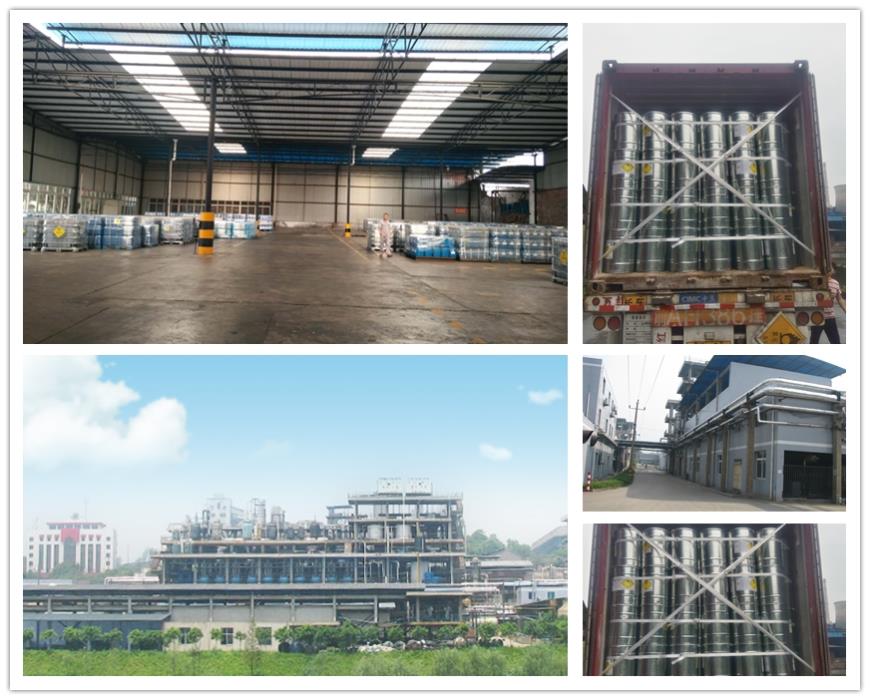
Founded in 1958, Chongqing Chuandong Chemical (Group) Co., Ltd., headquartered at No. 70, Danzishi New Street, Nan'an District, Chongqing City, is known as the "Top 10" enterprise in China's phosphorus chemical industry and as one of the vice president member...

Read More

Products

Capabilities

  1. Professional Support

    Product selection guidance, volume quotation, sample provision, and technical consultation ensure efficient purchasing decisions.

  2. Reliable Supply Chain

    As a certified manufacturer, we ensure stable chemical inventory, flexible production scheduling, and global logistics support.

  3. Quality & Compliance

    All products meet international standards (ISO, GMP, FCC/USP/EP), with each shipment accompanied by COA, MSDS, and optional TDS.

Chongqing Chuandong Chemical (Group) Co., Ltd

Culture

Innovation

We continuously develop new chemical solutions and refine processes to meet evolving industry demands.

Sustainability

Our operations prioritize environmental stewardship, responsible sourcing, and long-term resource efficiency.

Reliability

Consistent quality, stable supply, and responsive support ensure our partners can trust us in every project.

News Center

Chongqing Wansheng Chuandong Chemical Co Ltd

 From our vantage point on the factory floor, the challenges and opportunities facing chemical manufacturing stand clear. Companies like Chongqing Wansheng Chuandong Chemical Co Ltd have demonstrated staying power in an industry that demands both resilience and technical savvy. Their roots run deep in phosphorus-based chemicals and fine chemical development – a sector that rewards consistent investment in better processes and real gains in quality. Over the years, we have often crossed paths with firms in this sector who chase short-term windfalls rather than investing the capital and patience needed for reliable scale-up. But Wansheng Chuandong has developed a reputation among manufacturers for building enduring technological systems. Business survival here favors the producers who tackle energy use optimization, waste handling, and raw material efficiency with hands-on attention rather than grand marketing slogans. Their consistent performance – from procurement through batch processing – makes a difference to buyers who trust in predictable, reproducible product lots, especially for downstream applications in flame retardants, plasticizers, and additives.  Producers dig in for the long haul. The past decade, and especially the recent global disruptions, have taught every chemical manufacturer the weight of reliable upstream partners. Unglamorous work like warehouse upgrades and digital management systems matter greatly, because a production stoppage from a missed delivery ripples far down the chain. Wansheng Chuandong’s move toward vertical integration serves as a practical example. By holding more control over supply to production, they keep their plants running when lesser-prepared facilities run dry. In our own operations, we have felt the strain when a single key raw material stalls at customs or experiences a sudden shortage. These aren’t rare events—they’re everyday frictions. So a stable, invested company like Wansheng Chuandong earns trust not from press releases, but by demonstrating they keep their logistics tight, their suppliers close, and their inventory visible.  New regulations keep ratcheting up the stakes. Local governments and overseas buyers want real documentation and honest reporting, not back-burner tick-boxes. For manufacturers handling phosphorus and related chemicals, stakes climb even higher—anything from dust emissions to accidental discharge draws scrutiny. Direct experience tells us that investments in containment and monitoring don’t just meet law; they prevent nightmarish downtime. Wansheng Chuandong has taken visible steps toward improving its HSE practices, from on-site training to site audits. These actions help steady the sector, not by chasing headlines, but by fostering a culture where issues surface early and get solved before they balloon. If the operators on the shop floor don’t believe their management watches out for them, quality and morale slip fast. When neighboring manufacturers adopt tighter emission controls or upgrade their fire safety systems, it benefits everyone. Industry-wide, the safer we all run, the fewer regulatory shocks any one company faces.  Markets change, but the chemistry rarely follows a silver-bullet path. Long development cycles, strict customer requirements, and rising input costs push us to keep innovating—yet flitting from trend to trend without strong R&D chops wastes more than it saves. Wansheng Chuandong keeps investing in practical, continuous improvements to both batches and purification methods. Our own teams have seen the difference between a factory that runs the same processes unchanged for years and one that does regular technical reviews. Upgrades to reactors, solvent recovery, and purification can raise yield percentages in small, cumulative steps, saving both money and resources. Downstream users, whether compounding plastics or making paints, need assurances that a slight tweak in formulation won’t derail the end product. Only a manufacturer with a laboratory that partners with end users, not one that simply pushes product out the door, can give those assurances. On-the-ground R&D—not just in test tubes, but in actual plant-scale runs—eliminates nasty surprises, especially around scale-up and raw material variability.  Competitive pressures keep tightening, with new plants springing up overseas and middlemen muddying the market. For years, some importers confused traders with real manufacturers, fueled by a patchwork of online listings and cut-and-paste certifications. But purchasing teams get wise quickly. What consistently sets a true chemical manufacturer apart goes beyond the basic ability to deliver product. Customers ask for batch histories, precise test results, and sometimes bespoke modifications. Only companies running their own production lines can tune their process on short notice, trace issues back to a precise shift, and provide root-cause documentation if a problem ever emerges. Over the years, this arms-length trust matters most, not only for direct buyers but for the consumer-facing brands downstream who risk their own names with every new supplier. Wansheng Chuandong, by continuing to show its work through plant visits, real certifications, and transparent quality logs, strengthens these relationships. Cutting corners disappears as an option if the customer walks the shop floor.  No manufacturer gets every detail right—there’s continual pressure to lower emissions, boost process safety, and match market prices across shifting global tariffs and trade restrictions. The domestic landscape in China pushes every producer to compete not just with neighboring provinces but with importers flooding the market with sometimes questionable pedigrees. Aging equipment, labor retention, and digital transformation all present moving targets. The actual work of aligning innovation with responsible practices takes real investment, not half-measures. Wansheng Chuandong stands as an example in our field of pushing for practical, incremental progress, even as regulations tighten and foreign buyers call for ever-cleaner traceability.  Manufacturing chemicals, especially phosphorus compounds and associated organophosphates, tests a company’s depth at every point from raw material sourcing to final shipment. Producers like Chongqing Wansheng Chuandong Chemical Co Ltd who invest directly in their own plants, train operators with care, and share technical data with customers, help bring much-needed reliability across a sector often perceived as volatile or opaque. By sticking to the practical basics—hard-won expertise, process control, hands-on problem solving—they move the industry closer to serving both advanced markets and demanding regulatory systems. Other manufacturers who aspire to stability and growth would do well to focus on the specifics: honest supply relationships, continual investment in plant improvements, full transparency with partners, and a willingness to adapt when the market or the science takes a new turn. Experience proves again and again that these are the foundations on which enduring chemical businesses are built. Mobile: +8615380400285E-mail: sales2@liwei-chem.comWebsite: chongqing-chuandong.com
Guangxi Liucheng Chuandong Phosphorus Chemical Co Ltd

 Living and working in phosphorus chemistry often feels underappreciated. Plenty of headlines float around about global trade flows and market volatility, but here in Guangxi Liucheng, the hard realities of chemical manufacturing shape every decision we make. Most people see only the finished phosphorus-based goods on the market, not the noise, heat, and persistence that go into every metric ton produced. Years of trial and error have carved out our approach, blending old-school methods with technical improvement, all to keep up with domestic and global demand while raising standard after standard for both safety and purity.  Staying ahead in this business means respecting natural advantages and recognizing barriers. Guangxi’s phosphate rock resources anchor us to the land—there’s no shortcut for reliable feedstock. This cuts risk in procurement, especially in turbulent times. But chemical processing never respects optimism alone. Inputs roll in, our methods convert rock to P-containing intermediates, and our crew manages every shift, often slogging through maintenance and troubleshooting instead of chasing theoretical yields. Production always collides with energy and water limits, plus the unpredictable quirks of each new raw material delivery. We see up close how controlling quality never comes easy—it’s a cycle of laboratory checks, batch corrections, and machine recalibration. If a fraction of P2O5 slips outside the target, customers notice, so internal discipline matters more than marketing claims.  Downstream players might debate over logistical efficiency or procurement terms, but on the production side, we constantly face a different set of pressures. Any interruption—whether from weather, equipment breakdown, or supply chain bottlenecks—can snowball through hundreds of workers and dozens of customer contracts. Years past taught us that agility beats size, so over time, the factory evolved its own system of batch planning, predictive maintenance, and a culture of reporting troubles early. Everyone from shift supervisor to quality inspector owns a piece of output, because if a batch fails, the local team eats the cost before any client does. Cash flow relies on converting raw phosphate rock, sulfur, and energy into usable chemicals day after day. Only after consistent manufacturing do brand and trust grow.  Our factory’s direct link to resource mines gives us strategic resilience, but brings local responsibility. Acidic effluent and solid waste present challenges that turn up as soon as you scale phosphorus chemistry. We’ve been forced to innovate in waste recycling: investing in byproduct recovery, upgrading scrubbers, and cooperating with authorities to meet new environmental targets. Young people coming up in the company see these projects as a point of pride, since keeping both factory and community safe secures jobs and social license to operate. Regulatory scrutiny tightens each year, and, unlike office talk, regulatory failure means fines or worse. We’d rather over-deliver than run the risk, which has nudged in-house standards beyond just meeting national codes.  Long-term buyers sometimes push for price cuts, but those conversations rarely account for the night-and-day running of rotary kilns or the sheer number of hands on every batch of phosphoric acid or phosphate salt. Some call for “sustainable value chain management.” To us, this means retaining skilled workers, not overextending credit, and treating phosphorus as more than bulk commodity. Our employees know the supply chain all the way back to blasting at the mine face, and every worker, from safety staff to senior chemist, sticks around thanks to steady wages and respect for the craft. Industry observers studying published output numbers don’t see the hundreds of hours poured into process analysis, nor how many small upgrades help us reduce emissions or cut down water use.  Clients in agriculture, detergents, feed, and other sectors depend on us for feedstocks with established batch-to-batch properties. These manufacturers rely on our operational predictability and transparent communication, rather than just a stacked paper trail. So we have learned to trace and document every lot, link it to batch history, and discuss openly if a process deviation arises; quick explanations and corrective measures matter more than spinning stories. In this field, long relationships grow from humility and proof of improvement every quarter, not just promises in meetings. The real impact flows from higher performance over years, not quarters.  We have adapted to global shifts in phosphate supply, balancing domestic priorities with export regulations. Chinese policy changes and shifting environmental frameworks can land quickly, but our team, through experience, saw that only factories deeply connected to their upstream mines and downstream processing teams can make fast adjustments without churning their supply or losing key customers. Partnerships with nearby plants, shared utilities, and logistical hubs form living networks that keep operations nimble even in volatile markets. Resilient operations come from a mix of old hands who remember lean years and young engineers with better data tools.  Investing profits back into plant modernization is unpopular with some stakeholders, but our track record proves that new autoclaves, better control software, and skilled operator training reduce downtime and incident rates. Technologies for energy recovery and smarter emission controls pay off, even if cost savings arrive gradually. Our lead process engineers still spend time learning from front-line operators, because even the most advanced DCS can’t replace experienced judgment during a plant upset.  Anyone visiting the site soon grasps the deep link between operational discipline and product integrity. Employees here learn quickly that attention to equipment, raw material variability, and safety shows up in the every-day reliability of phosphorus output. Clean records and customer trust don’t come from luck—they reflect intense internal feedback and willingness to own up when things slip.  No day in Guangxi Liucheng’s phosphorus plant unfolds as planned, but success grew from a culture of relentless handoff: from mining, to processing, to shipment, and finally to consistent customer delivery. Every new team member hears the same message: we don’t just sell chemicals, we prove that sustainable, disciplined manufacturing—here and now, under local conditions—matters most to every stakeholder, and to every batch sent into the world. Mobile: +8615380400285E-mail: sales2@liwei-chem.comWebsite: chongqing-chuandong.com

Guizhou Fuquan Chuandong Chemical Co Ltd

 Operating a chemical manufacturing facility in Guizhou means full exposure to every aspect of production, from choosing the raw limestone at the mine gate to loading the last bags on the departing trucks. Our industry faces constant scrutiny and rapidly changing expectations. Every year brings new standards for safety, emissions, cost control, and product performance, and the benchmark shifts with each technological leap by competitors. Guizhou Fuquan Chuandong Chemical Co Ltd earns its place on industry maps because reaching stable, reliable output in a region with challenging logistics and infrastructure doesn’t happen by chance. This company’s roots run deep in a region where local labor skills, ore quality, and water and energy access form the core of any practical business decision.  Building a chemical factory in the mountains of Guizhou steers every plant manager to rely on the region’s mineral wealth and adapt to the unique challenges of remote production. Years ago, the industry learned that bringing in third-party intermediaries to manage supplies or production steps wastes money and raises risk. Ownership of quarries, in-house labs, dedicated rail sidings—all these shape the cost and quality edge we see in locally rooted firms. You can’t trust a test certificate if you didn’t train the team running the titrator. Logistics teams grow used to the quirks of the terrain, hauling finished material out through winding roads and finding ways to work through seasonal floods or heat. The extra effort pays off in product reliability that customers have come to count on, and that’s why direct manufacturing stands apart from remote outsourcing or low-transparency arrangements.  Environmental controls stand among the hardest challenges for a chemical company in southwest China. Scrubbers, effluent monitoring, dust suppression—these are not bells and whistles, they are basic prerequisites for having a license to operate. In places like Fuquan, government attention to water use, air quality, and industrial waste comes with sharp teeth. If a plant slips and allows contaminated water into local streams, the community responds and the government acts. We’ve worked out that building effective containment and waste treatment from the outset, backed by continuous training for every operator, prevents large-scale headaches and protects the company’s credibility. Heavy fines and negative press costs more than any up-front investment in real, hands-on pollution mitigation—not just paperwork. Real improvement always comes from ground-level diligence and careful measurement, not slogans or superficial “green” branding.  Relationships with local communities can shape the fate of even the most technologically advanced chemical factory. In Fuquan and elsewhere in Guizhou, factories do not exist in a bubble. If the plant enables jobs and local business opportunity, it earns some degree of support. When trucks stir up dust or noise passes fence lines, the plant hears about it fast. These aren’t distant concerns for someone working alongside local staff every shift. Open hiring policies, direct communication with officials, and support for community schools or services builds the trust needed for long-term operation. Losing local support leads straight to protests, legal action, or sudden visits from regulators. No glossy brochure can replace steady, open management on-site and respect for every neighbor’s concern.  Power outages and resource shortages force manufacturing teams in Guizhou to improvise solutions that maintain output without cutting corners on quality or safety. Hydropower and coal still run the turbines, but fluctuating prices and tight supply chains mean that on-site generation and backup systems keep the factories moving. Unlike paper-pushing traders or resellers who can shrug and pass costs along, direct manufacturers feel the full force of every supply hiccup. Tight resource management translates directly into cost stability and product availability, and continual investments here distinguish serious long-term players from opportunistic entrants who disappear when profits thin.  Lasting progress in chemical manufacturing comes from building team skills, adopting better equipment, and tightening process controls. Guizhou’s difficult geography forces innovation: small improvements in filtering, drying, or reactor control can eclipse big headline investments made in easier locations. Our operators and engineers grow used to coaxing higher yields from local ore, tuning process recipes for batch consistency, and troubleshooting without a parade of hired consultants. This “make it work” mindset becomes second nature after years in the field. With each new piece of equipment, the company earns more flexibility, higher recovery rates, and fewer emissions. Sharing these hard-won lessons with customers, applications engineers, and downstream manufacturing partners keeps trust high and opens doors that no sales pitch could reach.  Each batch of chemical product needs to meet not just physical quality standards but also a mountain of regulatory paperwork, export documents, and compliance certifications. For a manufacturer in Guizhou, every misstep in documentation risks delays, missed shipments, and even export bans. Over time, we’ve seen the importance of proprietary in-house systems for tracking raw material inputs, tracing product shipments, and logging quality checks. Robust reporting stands as practical proof of reliability; it’s not an abstract legal requirement, it’s make-or-break for keeping global buyers on board. Relying on others for this task always introduces gaps and points of failure. Our department heads know that every signature, test sheet, and invoice carries real risk if overlooked. This reality separates long-term producers from speculative traders who skip the hard work and rely on intermediaries to clean up errors.  Sustaining chemical manufacturing in Fuquan means heavy investment in training apprentices, sending staff for technical workshops, and building a culture where plant personnel learn beyond their original job description. In places where industrial wages compete poorly with city jobs, keeping skilled staff requires not only reasonable pay but also a sense of pride and participation in the plant’s mission. Automation and digital monitoring change the way frontline workers spend their days, but hands-on troubleshooting and understanding the rhythm of the process still matter as much as ever. When operators know exactly what a particular gauge or sound means, downtime drops and product quality rises. In this line of work, loyalty and on-the-job know-how outperform any short-term hiring spree. Local talent keeps the plant resilient against the kinds of labor shortages or cultural disconnects that trip up less rooted operators.  End users remember setbacks—dust in feedstock, inconsistent particle size, or uncertain test results leave a mark that never goes away. Chemical producers like Guizhou Fuquan Chuandong Chemical Co Ltd spend months, sometimes years, rebuilding confidence after a single incident. There’s no shortcut for everyday discipline on the factory floor: calibration of each scale, cleaning each filter, and rechecking critical batches become ingrained habits. Customers ask for transparency and traceability as an entry requirement, and only a team steeped in the details of full-cycle production can honestly sign off on the answers. That direct accountability provides real reassurance and helps maintain demand even when broader market conditions shift unpredictably.  Mobile: +8615380400285E-mail: sales2@liwei-chem.comWebsite: chongqing-chuandong.com